Apropos Reliable Resolution
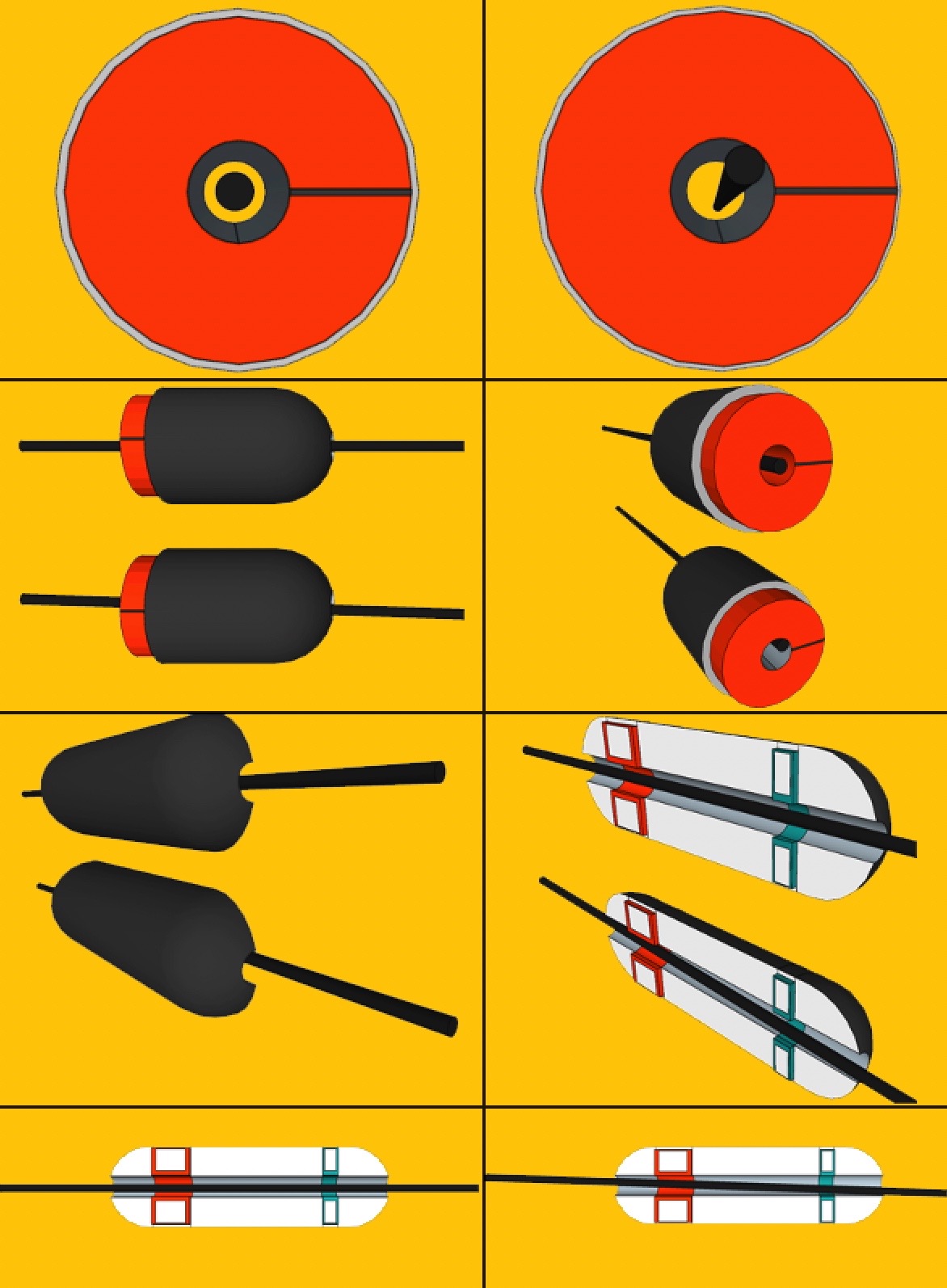
Historically, the high voltage transmission side of a power system has had an extensive monitoring and automation paradigm, via Supervisory Control and Data Acquisition (SCADA), Energy Management System (EMS), and Disturbance Monitoring Equipment (DME), among other layers. In contemporary times, the distribution level has received heightened attention, as it has become clear that substation-level monitoring and the decisions made can dramatically affect System Average Interruption Frequency Index (SAIFI), System Average Interruption Duration Index (SAIDI), Customer Average Interruption Duration Index (CAIDI), and Momentary Average Interruption Frequency Index (MAIFI) reliability metrics. Since large Capital Expenditures (CAPEX) are typically necessary to retrofit and/or implement advanced monitoring paradigms, contemporary times have seen an increase in the use of portable clamp-on power line measuring devices for the sake of convenience and cost. The prototypical design for portable clamp-ons has often centered upon the Rogowski coil for the sensor. The promising aspect of these clamp-on power line sensors resides in the fact that conventional Current Transformers (CTs) have several known disadvantages. For example, CTs typically contain a ferromagnetic core that consumes power due to hysteresis losses (e.g., core loss, via heat, due to the magnetization and demagnetization of the core, such as when current flows in the forward and reverse directions), and CTs can saturate (normally, the CT is reliable for generating a replica of the primary current waveform with a reduced magnitude that is in proportion to the turns ratio). When the CT is saturated, it no longer supplies the secondary current proportional to the primary current. The complexity around this accuracy issue (the highest CT ratio should be used for optimal measurements) must also be considered along with the operational complexity of potentially needing to de-energize certain circuits prior to the implementation of CT-centric Disturbance Monitoring Equipment (DME) (e.g., Digital Fault Recorders, Phasor Measurement Units, etc.). Hence, clamp-on sensors, predicated upon the Rogowski coil paradigm, have shown promise. However, for high-resolution requirements, the clamp-on sensor paradigm may not be the most optimal approach, as clamp-on sensors utilize the current induction principle, and there is a parasitic air gap between the conductor and the clamp-on sensor. For some, this is considered to be an inherent disadvantage of the clamp-on paradigm, as the air gap directly impacts the resolution of the measured value. While the involved Rogowski coil can be designed to be more insensitive to parasitic air gaps and magnetic fields, it can potentially be beset by still other issues, such as capacitively induced signals (as the cables used for industrial equipment systems may carry high voltages that change at high rates) and a strong reduction of the output signal at discrete notch frequencies (the lowest of which defines the effective bandwidth of the coil). While larger terminating resistances may mask the effect of sub-optimal orientations, larger terminating resistances not only change the magnitude of the output, but also segue to substantial changes to the involved waveform (in contradiction to the effect of a large value for the number of turns N). In addition, larger terminating resistances lead to a more substantive effect by the involved shielding. Apart from the described parasitic air gap and the magnetic fields issues, the movement of the conductor in relation to the clamp-on sensor (such as caused by high wind), such as shown in Figure 1, also affects the resolution of the measuring value, as the ensuing results from each position shift of the conductor within the clamp-on sensor (e.g., angle change as well as any deviation from the central position of the primary conductor) results in differing values.